
What a Hip Flask Is For and Whether Carrying One Is Legal
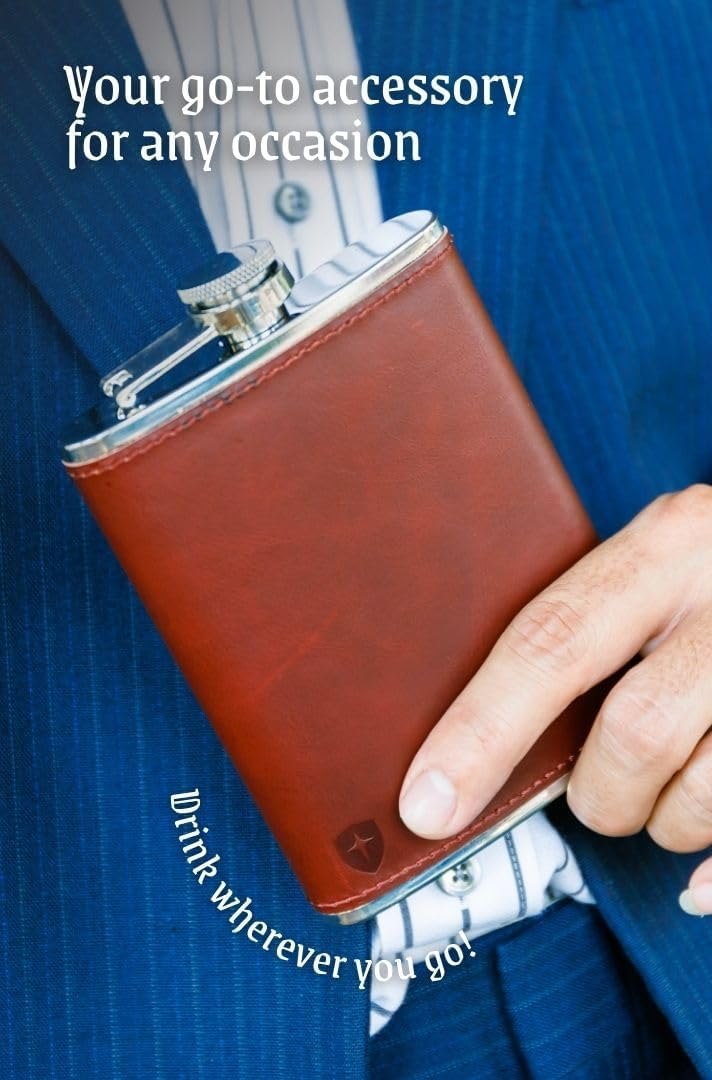
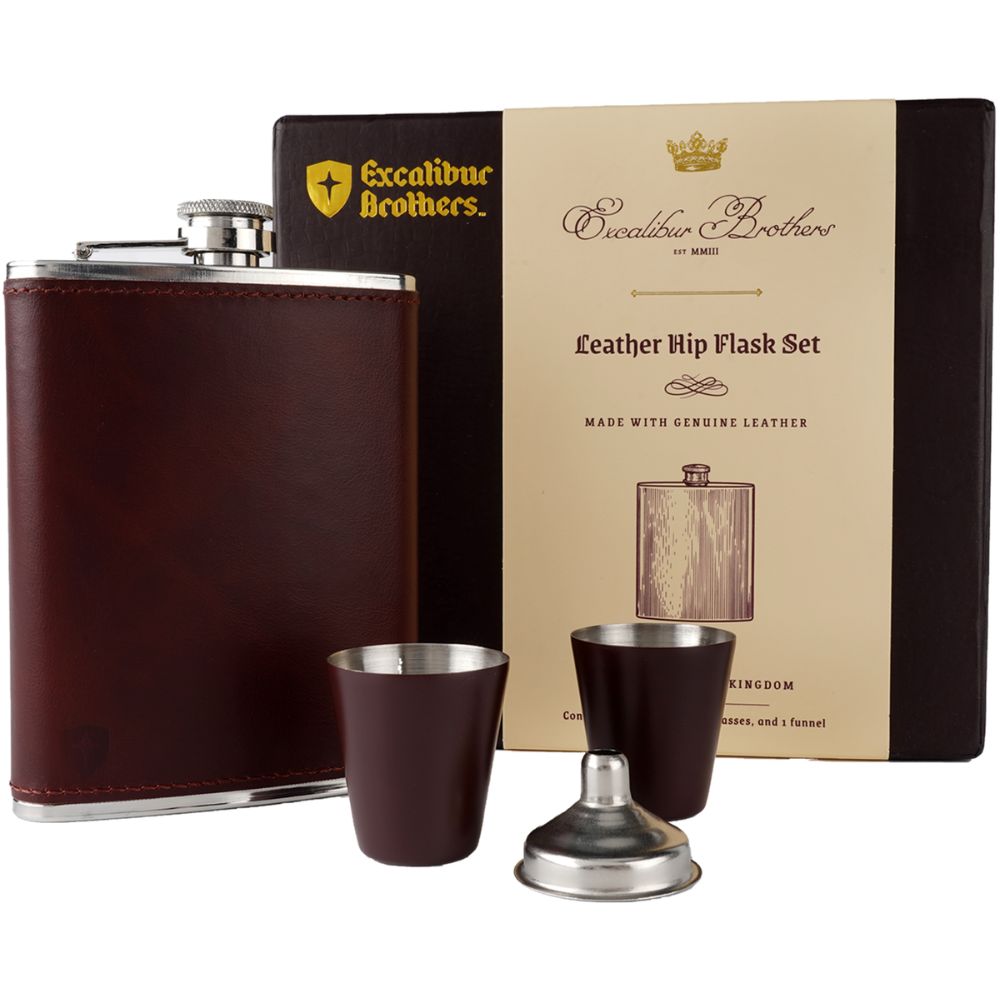
★★★★★Great Birthday gift !I’m very impressed with the quality of the product. I bought this as a birthday gift for a man, and he loved it.Amazon Customer, verified purchase
★★★★★Good choicePerfect for a gift or for personal use. Good quality and a genuine look.mihai, verified purchase
★★★★☆Nice qualityMy son-in-law has discovered good quality bourbon so I thought he might like this flask. It presents well. Appears well made and looks more expensive than it was.Cherie, verified purchase
From the Amazon listing.
A hip flask is a flat metal bottle, usually 6 or 8 oz, shaped to sit against your hip inside a jacket or a back pocket. It carries spirits: whiskey, bourbon, rum, gin. It exists so you can have two or three drinks somewhere that doesn't sell them, and drink them out of something better than a plastic cup.
That's the whole idea. The rest of this page is the practical part: how much one holds, how to fill it without wearing half of it, what ruins one, and how to carry it so it doesn't print through your jacket like a paperback.
On this page
- What a hip flask is and what it's for
- A short history, from pilgrims to Prohibition
- How to fill a hip flask
- Sizes and how many shots it holds
- What to put in it, and what never goes in
- Materials: stainless, leather-wrapped, pewter, glass, titanium
- How to carry and wear it
- How to clean it
- Is it legal to carry a flask?
- Choosing one
- FAQ
What a hip flask is and what it's for
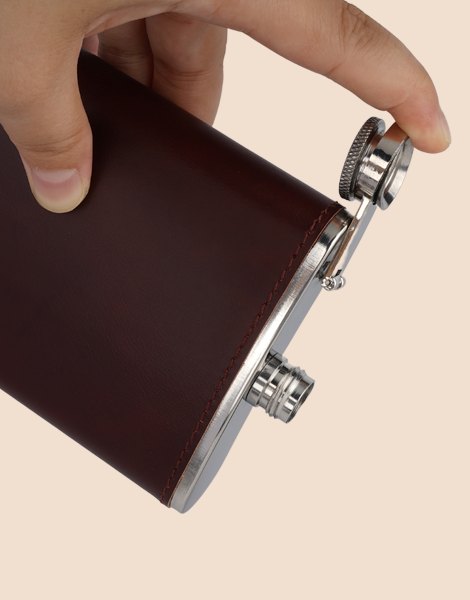
The shape is the point. A flask is curved on one face so it lies flat against your body, with a narrow neck and a screw cap, and on good ones that cap is hinged so you can't drop it in the grass at a wedding.
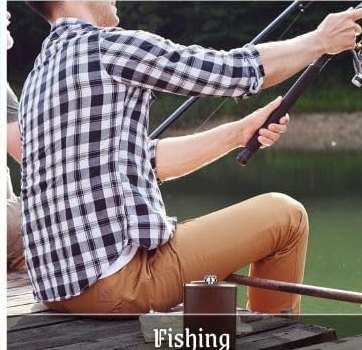
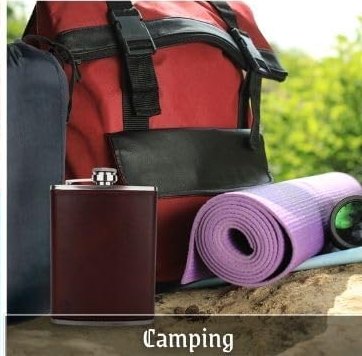
What's it used for? Cold weather, mostly. A round of golf in November, the fourth quarter of an outdoor game, a hunting stand at 6am, a campfire, a toast after someone's ceremony when the bar is a forty-minute line. It also gets bought as a gift, which is why the search "flask for men" turns up gift sets instead of gear. Groomsmen, fathers, brothers-in-law. Someone hands it over engraved and everyone nods.
One thing it isn't: storage. A flask is a vessel you fill the morning of and empty that night. Whiskey lives in the bottle, where it has a cork and no gasket and no seam. People who leave bourbon in a flask for six months come back and blame the flask for the taste.
If it's going out as a present, the men's gift guide has the other pocket-sized options.
A short history, from pilgrims to Prohibition
Before metal, drink traveled in skins and horns. Medieval pilgrims carried water and oil that way across Europe, and the shape of those had nothing to do with pockets.
The flat pocket flask we'd recognize shows up in the 18th century among the British gentry. Silver, engraved, often hallmarked. A status object first and a drinking vessel second. Soldiers carried them too, and the same word covered powder flasks, the ones that kept gunpowder dry.
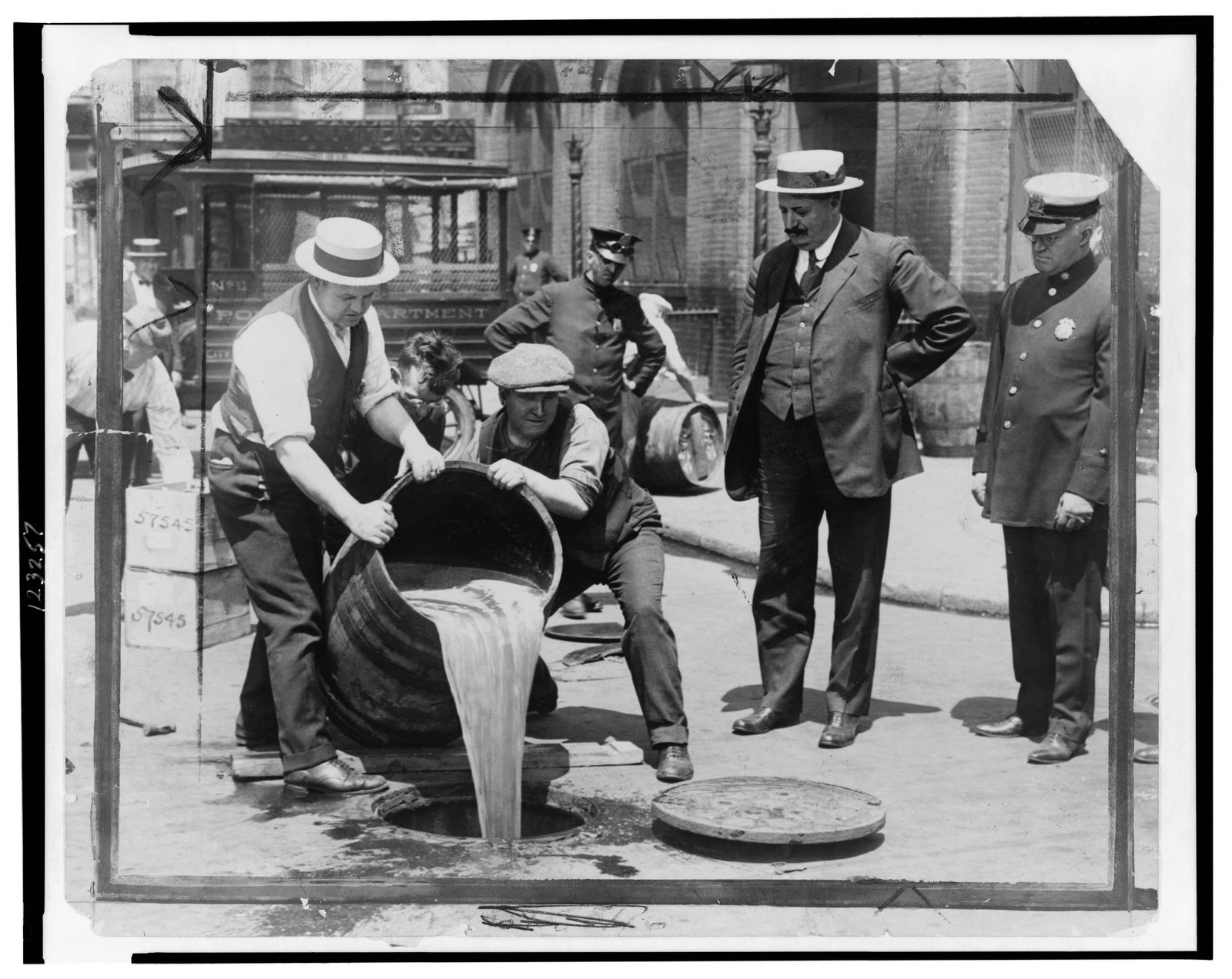
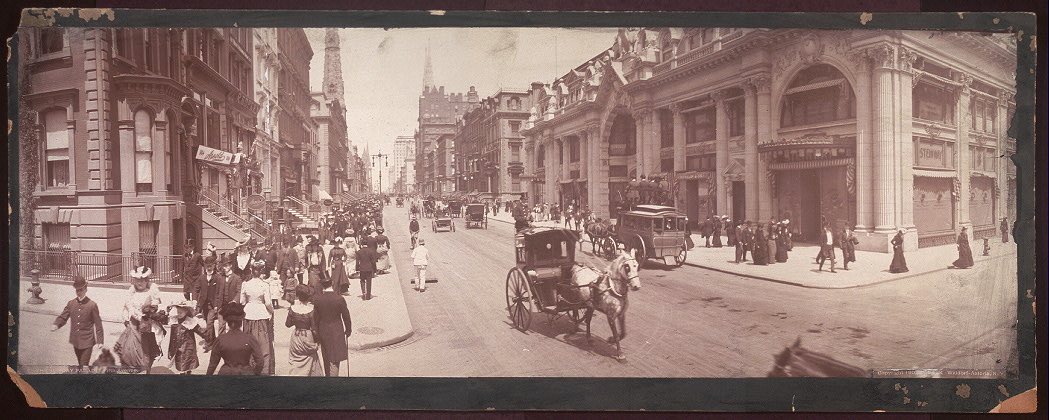
Then America went dry. The Eighteenth Amendment1 was ratified in January 1919, the country stopped selling legal alcohol in January 1920, and it stayed that way until 19332. The hip flask became the tool of the decade because it did exactly one thing well: it went where the bottle couldn't. Makers built them curved to hide in a boot3, thin enough for an inside pocket, small enough to sit under a garter. Thirteen years of that is why a flask still reads as slightly illicit, a century later, at a bachelor party where nothing about it is illegal.
How to fill a hip flask
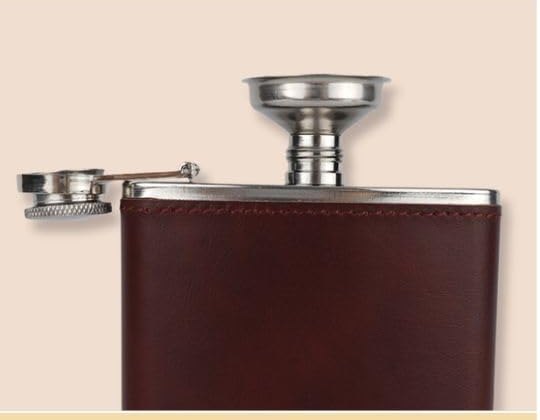
Stand the flask upright on a flat surface. Put the funnel in the mouth and pour slowly, stopping about half an inch below the neck. Lift the funnel out, wipe the threads and the outside dry, then screw the cap down firmly by hand. Turn it upside down over the sink for thirty seconds before it goes anywhere near a pocket.
The long version, in order:
- Rinse a new flask first. Warm water, a drop of dish soap, three rinses. Factory flasks taste like the factory. Skip this and your first pour tastes like machine oil and you'll blame the whiskey.
- Put it down. Filling a flask held in one hand is how you end up with a wet sleeve. Sink, counter, tailgate, anything flat.
- Funnel in, pour slow. A bottle glugs when air fights its way back in, and the glug is what overflows the funnel. Tilt the bottle gently and let it run.
- Stop below the neck. You want a little air in there. Liquid expands against body heat, and a flask filled to the brim pushes spirit up into the threads, where it wicks out and convinces everyone you're leaking.
- Wipe the threads. This is the step everyone skips. A dry gasket seals; a wet one weeps and smells like a bar mat by lunchtime.
- Cap it firmly, not violently. Hand tight. Cranking it crushes the gasket and shortens the life of the seal.
- Leak test over the sink. Upside down, thirty seconds. Better to find out here than in a borrowed jacket.
No funnel? A cone of paper works, so does the snipped corner of a zip bag. Full method here: how to fill a flask without a funnel.
Sizes and how many shots it holds
Six and eight ounces cover most of the market. An 8 oz flask holds 236 ml, which is five standard 1.5 oz shots with a splash left over. A 6 oz holds 177 ml, exactly four shots. A 4 oz is 118 ml, call it two and a half, and the 1.5 oz to 3 oz minis are one round and a goodbye.
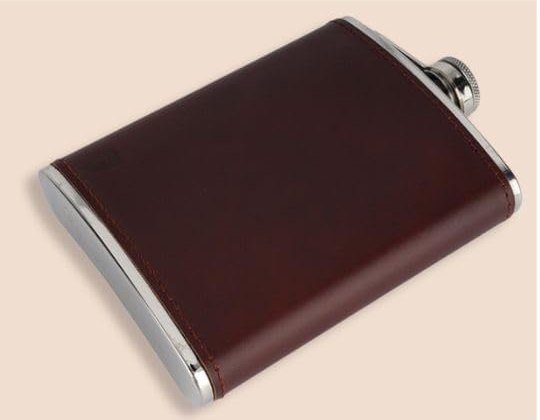
Pick by pocket, then by evening. A 6 oz disappears inside a slim suit jacket and you'll forget it's there. An 8 oz is the right call when there are two of you, because it's two solid drinks each, and it's still flat enough for a coat. Past 8 oz you're carrying a paperback and it shows from across the room.
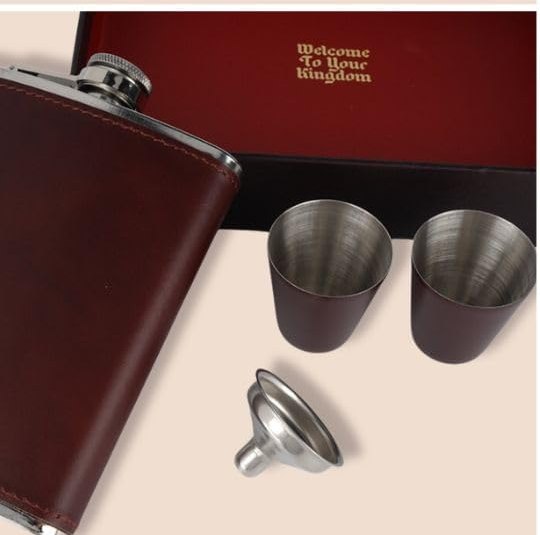
Those little pony cups that come with gift sets hold about an ounce each, so an 8 oz flask fills each one four times.
Full chart with milliliters, shot counts and dimensions: hip flask sizes.
What to put in it, and what never goes in
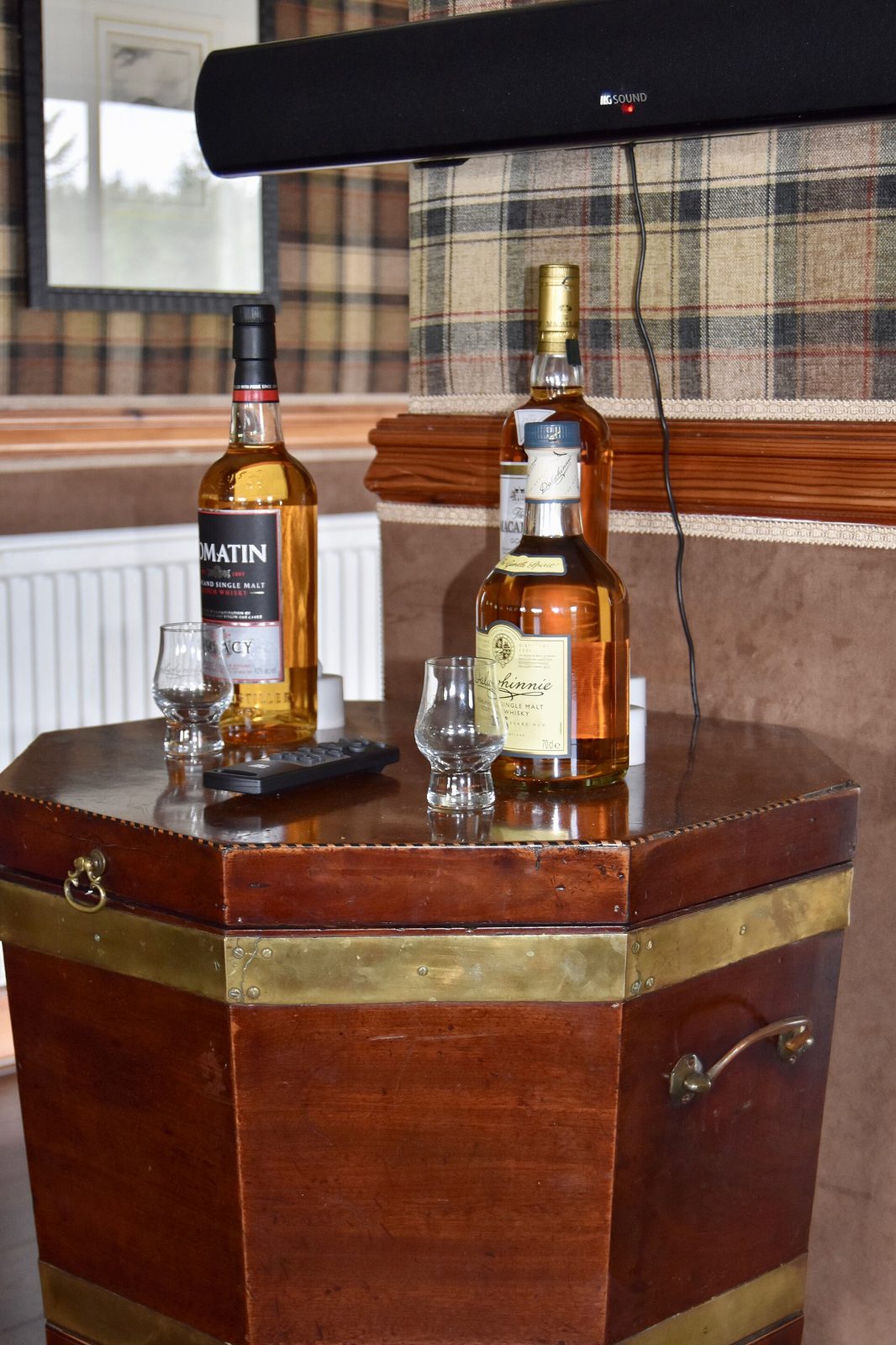
High-proof, no sugar, no dairy. That's the rule, and everything else follows from it. Whiskey, bourbon, rye, Scotch, brandy, dark rum, gin, vodka, tequila, mezcal. All of them sit happily in stainless for a day or two and come out tasting like themselves.
What doesn't work:
- Anything carbonated. Beer, cider, seltzer, champagne. A flask cap is a seal, not a pressure vessel, and warm carbonation will either push past the gasket or greet you at the cap.
- Cream liqueurs. Dairy in a warm metal container against your body for four hours. Don't.
- Juice and premixed cocktails. Sugar and citrus acid attack the seal and the finish, and they spoil.
- Wine. It oxidizes fast in a half-empty flask and tastes tired within hours.
Water is fine for a day. Rinse and dry it afterwards so nothing sits in the threads.
Deep dive on what holds up and what doesn't: what to put in a hip flask. If it's specifically whisky you're carrying, the whisky flask comparison covers which builds don't interfere with the taste.
Materials: stainless, leather-wrapped, pewter, glass, titanium
304 stainless steel is the default and the right default. Food grade, doesn't rust, doesn't hold flavor from the last drink, survives being dropped in a parking lot.
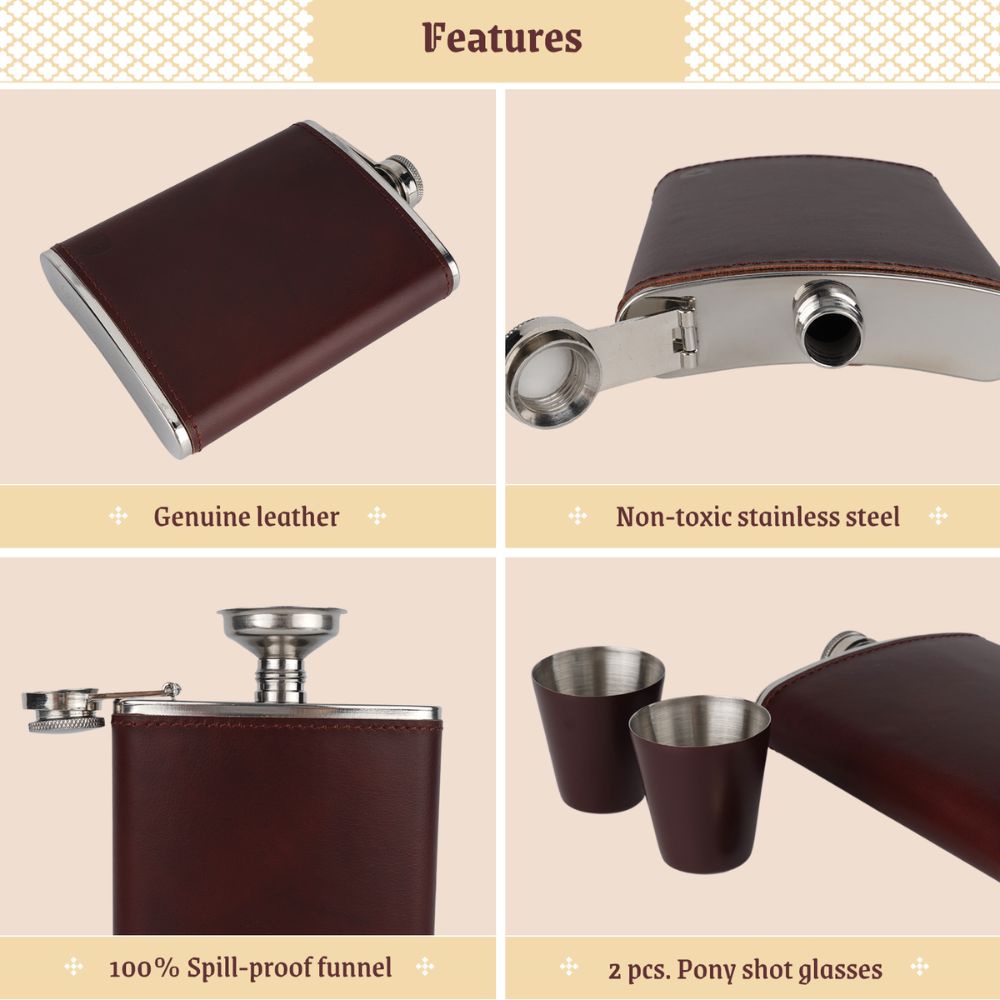
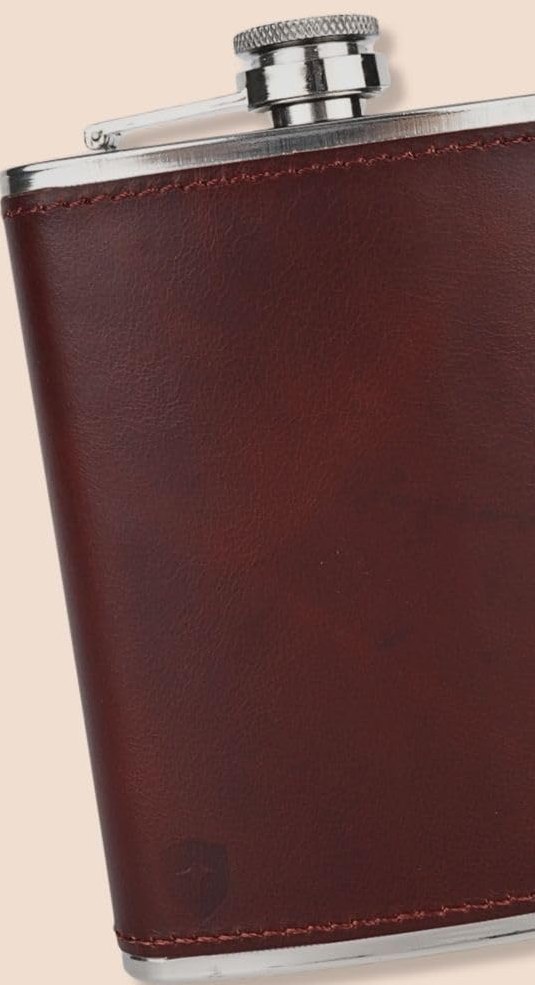
Leather-wrapped means a steel flask with a wrap over it, which changes the grip and the look, not the contents. Two kinds exist and they behave differently. Genuine leather ages, darkens, and wants conditioning once or twice a year (how to condition leather). PU leather, which is polyurethane, is synthetic: it wipes clean, never needs conditioning, won't develop a patina, costs less and weighs less, and shrugs off the spills that stain real hide. Our flask uses smooth PU leather over the steel. It's a leather-look wrap, and anyone who tells you their $35 flask is full-grain is selling you something4.
Pewter is the traditional British answer. Soft, heavy in the hand, dents if you drop it, hand wash only. Modern pewter is lead-free; antique pewter may not be, so don't drink out of a flea-market find without knowing what's in it.
Glass gives you zero metal taste and breaks. Titanium is light and inert and expensive.
Side by side on weight, durability and price: leather vs stainless steel flask.
How to carry and wear it
The inside breast pocket of a jacket is the best spot and it isn't close. The curve follows your chest, the weight hangs from your shoulder instead of your waistband, and nothing shows. Second best is the back pocket of trousers, with the curved face against you, which works until you sit down on it.
Front trouser pocket works for 4 oz and under. Anything bigger sticks out sideways when you sit. Kilt wearers use a sporran and have been solving this problem longer than anyone. Golfers use the bag and skip the wardrobe question entirely.
Two things worth knowing. Metal takes the temperature of whatever surrounds it, so a flask against your ribs is at body temperature within twenty minutes, which suits whiskey and ruins anything you wanted cold. And a flask lying flat in a bag has its cap in the liquid all day, so that's the moment a mediocre gasket announces itself.
Pocket-by-pocket, plus what to do at a black-tie event: how to wear a hip flask.
How to clean it
Empty it the same night. Hot water, one drop of dish soap, swirl hard, rinse three times, and most of the job is done. For a flask that's been sitting, warm water with a teaspoon of baking soda left for an hour will lift the stale smell, and uncooked rice with a little water, shaken like a cocktail, scours the inside corners a brush can't reach.
Keep it out of the dishwasher. Heat plus detergent wrecks a leather or PU wrap, dulls the finish and hardens the gasket. Bleach is worse.
Dry it properly: upside down on a rack, cap off, overnight. Store it with the cap loose so air moves through, because a sealed damp flask is how you get a musty one. If it has a wrap, wipe that with a damp cloth and leave it out of the sink.
Full routine including stubborn residue and the stale-whiskey problem: how to clean a hip flask.
Is it legal to carry a flask?
Carrying a closed flask on your person is legal in most of the US. Drinking from it in public usually isn't, and that's where people get it wrong.
Open-container rules are set by states and cities, so the answer changes when you cross a line. A few places carve out exceptions in defined districts, like the French Quarter in New Orleans and the Las Vegas Strip. Most everywhere else, a drink in the open is a citation.
Cars are stricter. In most states an alcoholic container is "open" once the seal is broken, and a flask never had a seal, so it's generally treated as open no matter how tight the cap is. Keep it in the trunk.
Venues are a separate question from the law. Stadiums, festivals, theaters and airlines ban outside alcohol under their own rules, and being within your rights under state law is no defense at a gate. Flying: an empty flask goes through security fine, and liquids over 3.4 oz5 can't ride in carry-on. Checked bags are where people get this wrong. The 5-litre allowance for spirits applies to drink in unopened retail packaging6, which a filled flask is not, so the whiskey flies in its sealed bottle and the flask flies empty. Anything above 70% ABV7 is barred either way, and drinking your own alcohol onboard breaks FAA rules8.
None of this is legal advice. Check your state and the venue.
Choosing one
Six things actually matter. Capacity you'll finish in a night. A captive cap, hinged to the body, because a loose cap is a cap you'll lose. A real gasket rather than a bare metal-on-metal thread. 304 stainless. A welded seam. And a mouth wide enough that the funnel sits in it properly.
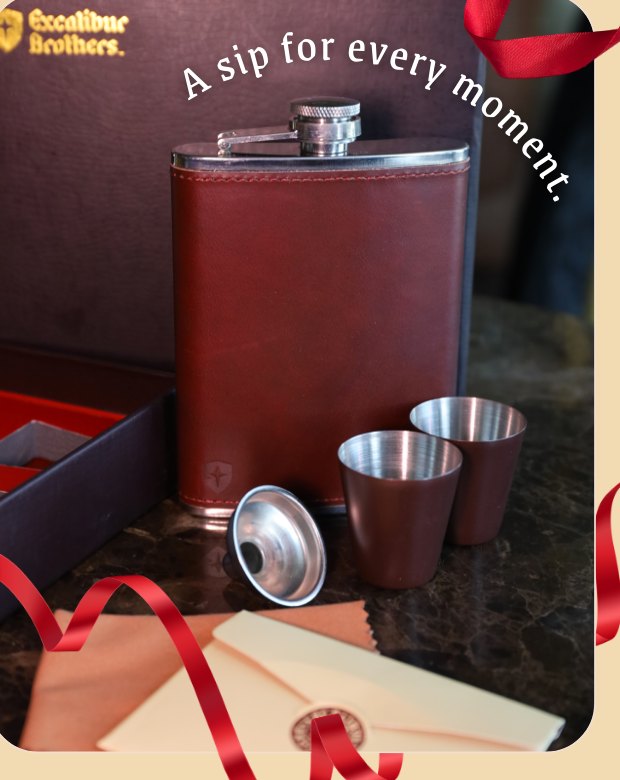
Most people searching for a flask for men are buying a gift, which shifts the decision toward sets: the flask, something to drink out of, and a box worth handing over.
Men's Leather Flask (Brown) with 2 Cups and Funnel — $34.95 — 4.6★ (107 reviews)
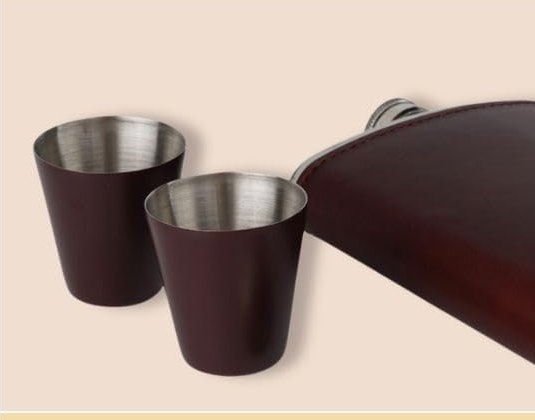
8 oz of 304 stainless with a laser-welded body, wrapped in smooth PU leather. The brand states it's pressure-tested and leak-proof. In the wooden case you get two stainless pony shot glasses at about an ounce each and the funnel, which makes it the rare gift that arrives ready to use rather than ready to be looked at.
Worth being straight about: the wrap is PU, not hide. It wipes clean and it won't need oiling, and it also won't age into anything. If you want a flask that develops a patina over twenty years, buy genuine leather and budget for conditioner.
Full specs and what owners say: the leather flask. Compared against other builds by published specs and reviews: best hip flask.
FAQ
What is a hip flask used for?
Carrying a few servings of spirits somewhere that doesn't sell them or doesn't sell them fast enough: a cold round of golf, a hunting morning, an outdoor game, a campfire, a toast after a ceremony. It's also one of the standard groomsman and father's-day gifts, usually sold as a set with cups.
How long can alcohol stay in a hip flask?
A day or two for high-proof spirits with no change you'd notice. A week or more and you start tasting metal and gasket. Sugary mixes, juice and cream liqueurs should come out the same day. A flask is a way to carry a drink, and the bottle is where it should be kept.
Is it illegal to carry around a flask?
Carrying one is legal in most US jurisdictions; drinking from it in public generally isn't, and open-container rules vary by state and city. In a car it's usually treated as an open container regardless of the cap9. Venues set their own rules on top of all that. Check locally.
Do you need a funnel to fill a flask?
No, but it's faster and drier. Without one, roll a cone of paper and hold it in the mouth of the flask, or snip a corner off a zip bag and use it as a pouring spout. Both work. Both need you to pour slowly. Details: how to fill a flask without a funnel.
Can I put water in a hip flask?
Yes. Stainless holds water fine for a day, and plenty of people cut whiskey with a splash carried separately. Don't leave water sitting in there for weeks, because standing water and a damp gasket are how flasks start smelling stale. Rinse and dry it like you would after spirits.
Sources
Every figure, rule and date above traces to one of these. We link the body that issued it, never someone's summary of it, and we don't link anyone who sells what we sell.
- National Archives and Records Administration, The Constitution: Amendments 11-27 — Amendment XVIII. Checked 20 Sep 2026.
- National Archives and Records Administration, The Constitution: Amendments 11-27 — Amendment XXI. Checked 20 Sep 2026.
- Library of Congress, Prohibition: Selected Images from the Library of Congress. Checked 20 Sep 2026.
- U.S. Government Publishing Office / Federal Trade Commission, 16 CFR Part 24 § 24.2 — Deception as to composition. Checked 20 Sep 2026.
- Transportation Security Administration, Liquids, Aerosols, and Gels Rule. Checked 20 Sep 2026.
- Transportation Security Administration, Alcoholic beverages — What Can I Bring?. Checked 20 Sep 2026.
- Transportation Security Administration, Alcoholic beverages over 140 proof — What Can I Bring?. Checked 20 Sep 2026.
- Legal Information Institute, Cornell Law School, 14 CFR § 121.575 — Alcoholic beverages. Checked 20 Sep 2026.
- Legal Information Institute, Cornell Law School, 23 CFR § 1270.3 — Definitions. Checked 20 Sep 2026.
Everything in this guide
Leather Flask, 8 oz: Two Cups, a Funnel and 304 Steel304 stainless inside a smooth leather wrap. 8 oz, two pony cups, a funnel and a wooden case. $34.95, 4.6 stars
Hip Flask Sizes in oz and ml, and How Many Shots Each HoldsHip flask sizes from 1 oz to 64 oz in ounces and millilitres, how many shots each holds, typical dimensions in
What Should You Put in a Hip Flask So the Taste Holds Up?What to put in a hip flask: four spirits that hold up at body temperature, what never goes in, how long alcoho
How to Fill a Hip Flask Without a Funnel Using a Paper ConeHow to fill a hip flask without a funnel: a taped paper cone, a chopstick, a speed pourer or a tilted pour, an
How to Wear a Hip Flask, Which Pocket and Which Way UpHow to wear a hip flask: which pocket takes which size, which way the curve and the cap face, when to offer it
How to Clean a Hip Flask and Get the Whisky Smell OutHow to clean a hip flask: warm water, one drop of soap, three rinses, then dry it cap off and upside down. Wha
The 10 Best Hip Flasks, Compared by Price, Size and ClosureTen hip flasks compared on capacity, body material, closure and list price, with picks for best overall, best
Best Hip Flask for Whisky, Judged by What the Metal DoesThe best hip flask for whisky is an inert body: 304 stainless or glass. Five picks compared on material, closu
A Leather or Stainless Steel Flask Holds the Same 304 SteelLeather vs stainless steel flask: both hold the spirit in the same 304 steel. What the wrap changes, PU agains

