How to Condition Leather With Four Checks and One Thin Coat
Clean the leather with a barely damp cloth and let it dry fully. Test your conditioner on a hidden spot. Rub a thin coat in with a soft cloth in small circles. Wait 20 to 30 minutes for it to absorb, then buff off whatever stayed on top. Twice to four times a year for anything you carry.
Most of what's written about how to condition leather is aimed at sofas and car interiors, which are big pigmented panels that want an upholstery product and a different technique. This page is about the leather you carry: a leather journal cover, a wallet, a belt, a bag strap, a watch band. Small pieces, handled daily, and easy to overdo.
How to tell leather needs conditioning
Leather is skin with the animal's own fats stripped out at the tannery and a measured amount of oil put back in before it dries. The trade calls that fatliquoring1, and it's what lets the fibers slide against each other instead of cracking. So conditioning doesn't replace anything the animal had. It tops up what the tannery added.
Worth knowing that drying out is only one of the ways leather dies, and not the one that kills old leather. The other is acid: sulphur dioxide from polluted air is absorbed into the hide, turns to sulphuric acid2, and breaks the structure down from the inside. That's red rot, and no tin fixes it. Conditioning addresses the fatliquor, and only the fatliquor.
Four checks tell you it's time, and you want at least two of them pointing the same way before you open a tin.
It's gone dull and a bit chalky. Healthy leather has depth even when it isn't shiny. Dry leather goes flat and the color looks like it's sitting on the surface rather than in it.
It feels stiff. Bend a corner or a strap. Dry leather resists, then creases sharply instead of curving, and the crease stays after you let go.
Light scratches don't heal. This is the reliable one. Rub a surface scuff with your thumb for a few seconds. On leather with oil still in it, the warmth and pressure pull the fibers back together and the mark mostly disappears. On dry leather the scuff stays exactly where it was, pale against the rest.
A water drop vanishes instantly. One drop on a hidden spot. If it soaks straight in you've got bare, thirsty leather; if it beads there's still wax or finish on top. This one is useful on unfinished veg-tan3 and unreliable on anything with a factory topcoat, where water beads on a finish that's hiding dry leather underneath. Treat it as a hint, not a verdict.
What isn't a reason to condition: the leather looks dirty, it got rained on once, or it's been six months and you feel you should. Dirt comes off with a damp cloth. Rain wants air drying. And leather that's still supple doesn't need feeding.
What to use: oils, waxes and balms
A leather conditioner is a fat or wax carried in something that helps it get in. Four families cover almost everything worth buying.
Beeswax-based balms. Wax sits mostly at the surface and slows water down, usually blended with an oil that does the actual penetrating. This is the default for small goods that live in a pocket, because the finish is dry to the touch and won't mark a shirt. Obenauf's LP is the heavy end of this category, built on beeswax and propolis for boots and work leather, and it will darken most leather noticeably.
Lanolin and cream conditioners. Lanolin comes from wool and behaves a lot like the fats already in hide, so it softens without much greasiness. Chamberlain's Leather Milk is the familiar one for bags and desk pieces. Bickmore Bick 4 is the cream to reach for when you're afraid of darkening, since not changing the color is the whole pitch of the product.
Neatsfoot oil. Rendered from cattle bone, thin, and it soaks deep. Excellent on thick veg-tanned work leather, holsters and boots. Two cautions. Buy pure neatsfoot oil, not neatsfoot oil compound, which is cut with petroleum distillates. And it darkens leather permanently4, often by more than one shade.
Mink oil. Rendered animal fat, heavier than neatsfoot, and the most water-resistant of the group. It also softens aggressively, which is wrong for anything that should hold a shape, and it darkens. Saphir Renovateur is the refined version, blended with waxes for fine shoes and smooth-finished goods.
For a journal cover, a wallet or a watch strap, start with a cream or a light beeswax balm. The oils are for thick leather that works for a living.
What conservators say, and why we still tell you to condition
Before you open a tin, you should know that museum conservators are against everything on this page. Not just the olive oil: the beeswax balms and the jojoba too. The Canadian Conservation Institute warns that dressings can be harmful5 because oils oxidize in time and produce deteriorative effects, and the US National Park Service tells its own staff to refrain from dressing leather4.
They're right, for what they're protecting. A two-hundred-year-old saddle in a case has exactly one job, which is to still be there in another two hundred years, and every oil you add is a slow chemical change nobody can reverse.
The Park Service writes the exception down, though, and the exception is where you live: applying dressings to personal, non-museum objects4 is acceptable, and it names work boots, baseball gloves and saddles — things that have to keep working. A journal cover in a coat pocket is in that category. You aren't preserving an artifact. You're keeping an object usable, and a cracked cover has already failed.
So condition what you carry, thin coats, twice to four times a year. Don't condition the thing you inherited and care about historically. That one goes to a conservator, not to a tin.
What never to use on leather
Every item here shows up in home remedy posts, including two that were on this site until we replaced them with this page.
WD-40. It's a water-displacing solvent with a little light oil in it. The solvent is the problem: it thins and carries off the oils already in the leather, and leaves a film that attracts dust. It makes dry leather look better for about a day. It does not protect it.
Olive oil and coconut oil. The internet says both go rancid, and the internet is half right, by different chemistry for each. Olive is an unsaturated plant oil that oxidizes in contact with air, and inside leather fibers that means a stale smell that won't wash out and no way to extract the oil. Coconut is close to ninety per cent saturated, so it resists oxidation and turns the other way instead, by hydrolysis, into the soapy free-acid smell you know from old suncream. Two mechanisms, same result in your bag. Both darken leather permanently and unevenly, and coconut is solid below room temperature, so it goes on in patches.
Murphy's Oil Soap. It's a soap made for finished wood, and it's alkaline. Leather sits on the acidic side, and repeated alkaline washing degrades the fibers over time. It cleans, in the sense that stripping does.
Dish soap. Designed to dissolve fat and rinse it away. That's precisely the thing you're trying to keep. A drop in a lot of water on a filthy bag is survivable. Anything more is a stripping agent.
Petroleum jelly. Sits on the surface because it can't absorb, stays tacky, collects grit, and the grit does the damage. It also has a habit of migrating into stitching.
Baby wipes. Mostly water plus surfactants and preservatives. You're wetting leather and leaving soap in it, then letting it dry with the soap still there. They're fine for the inside of a car door and wrong for a wallet.
Heat belongs on this list too. No hair dryer, no radiator, no sunny windowsill to speed up drying. Fast drying is how leather shrinks and cracks.
How to condition leather naturally with a homemade balm
You can make a decent balm at home with two ingredients, and the version worth making is beeswax plus a stable oil. The olive oil and vinegar recipes that circulate online are the ones to skip, for the rancidity reason above.
Start at 1 part beeswax to 4 parts oil, by weight. That's a firm balm you scoop with a fingernail. More oil gives you something softer and greasier; 1 to 5 or 1 to 6 is a salve. Weigh it rather than measuring by volume, because wax pellets are mostly air.
For the oil, jojoba is the best choice for a first batch. It's technically a liquid wax6, it's remarkably stable6, and it won't go rancid on you in a drawer. Pure neatsfoot oil works if the piece is thick veg-tan and you don't mind it going darker.
Method: melt the beeswax in a heatproof jar standing in a pan of simmering water. Beeswax melts around 145°F7, so this takes a few minutes and needs no thermometer. Stir the oil in off the heat, pour into a tin, leave it to set for an hour. It keeps for a year or more.
Test a homemade batch on a hidden spot the same way you would a bought one. Your kitchen scale isn't a lab, and the ratio above is a starting point you adjust after you've felt the result.
How to condition leather, step by step
1. Clean it first. Wipe with a cloth wrung out in plain water, or a leather cleaner if there's real grime. Conditioner drives whatever is on the surface down into the leather, so dirt applied under oil becomes a permanent stain.
2. Let it dry completely. An hour minimum, away from heat, more if you actually wet it. Sealing moisture under a coat of wax is how you grow mildew inside a bag.
3. Test on a hidden spot. The inside of a flap, the back of a belt near the buckle, under a strap. Apply, wait 10 minutes, look at the color change in daylight. Almost every conditioner darkens leather somewhat. You want to see how much before it happens across the front.
4. Thin coat, small circles. Put the product on the cloth, never straight onto the leather. Work it in with light pressure in small overlapping circles. You're aiming for a surface that looks barely damp, not wet. This is where most people go wrong: a thick coat doesn't absorb deeper, it just sits there, turns tacky, and dries into dark blotches around the edges.
5. Wait 20 to 30 minutes, then buff. Give it time to draw in, then take a clean dry cloth and buff off everything still on top. If the piece stays greasy after buffing, you used too much. Let it rest overnight and buff again.
6. Leave it a day before hard use. Freshly conditioned leather transfers color. Don't put a just-oiled belt through white trousers.
How to condition a leather bag
Same six steps, with four changes for the bigger piece. Empty it and work panel by panel so the coverage stays even. Do the handles and the strap separately and more often, since hand oils and sweat pull the most out of those. Go lighter on a structured bag than on a slouchy one, because conditioner softens, and a briefcase that's lost its shape doesn't get it back. Leave the lining alone: fabric linings stain and suede ones mat.
How to condition a leather journal cover
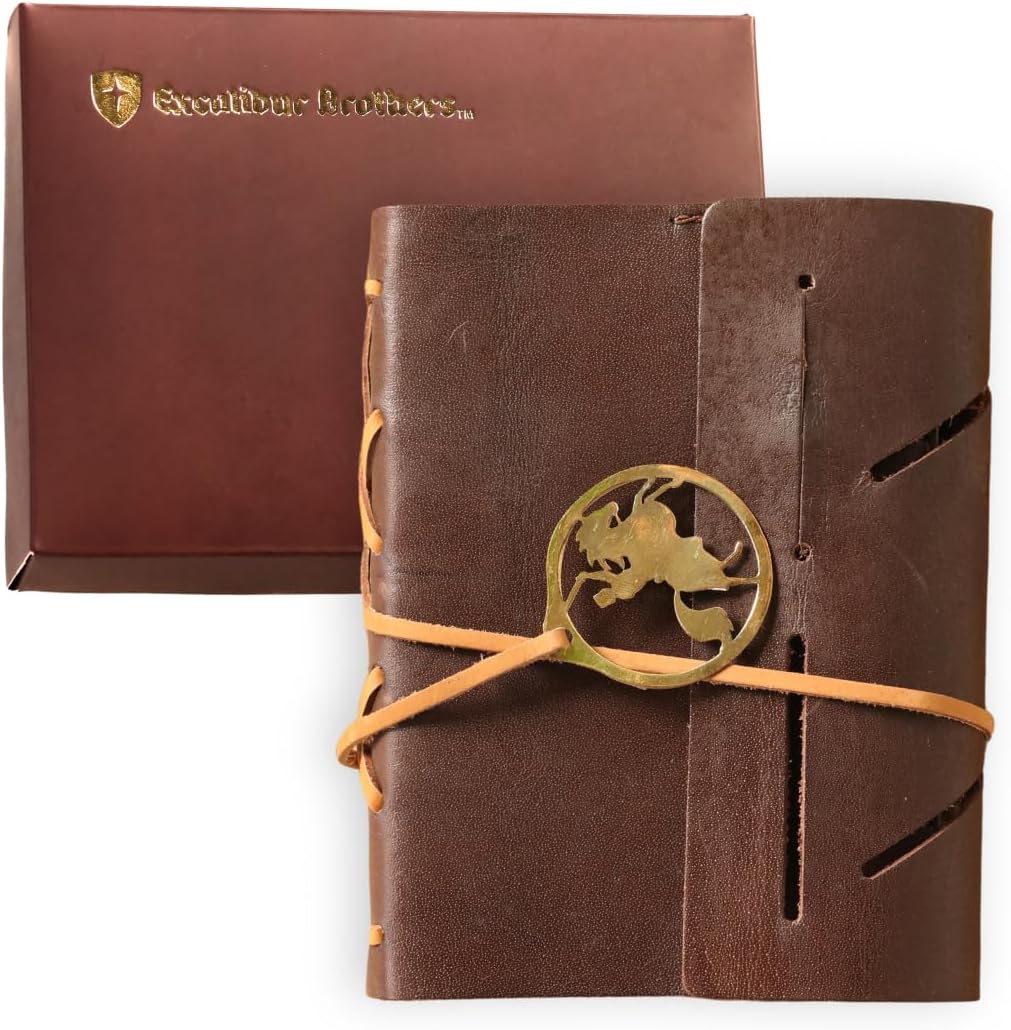
Our leather journal has a buffalo leather cover, which is thicker and more pebbled than cowhide and takes conditioner readily. Do this once or twice a year if you carry it, and expect the dark brown to deepen a shade and even out over the following week.
Take the insert out first. The cover is refillable, so the 100-page block lifts free of the elastic. Oil on ivory paper is permanent and it wicks. This alone is the reason to condition a journal rather than leave it.
Wipe the cover down, let it dry, then test on the inside of the back panel where nobody looks. A fingertip of balm covers the whole thing, inside and out, on a piece this size.
Work it into the spine and the two fold lines properly, because that's where the leather flexes and where it will eventually crack if it dries out. Go around the pen loop rather than saturating it.
Buff hard after 20 minutes and leave the cover open and empty overnight. Put the paper back the next morning, not the same evening.
How often to condition leather
Carried every day: two to four times a year. Stored or used occasionally: once a year, and check it when you get it out.
Adjust up if you live somewhere dry, if the piece spends winters in forced-air heat, or if it's had a soaking. A pocket notebook cover that rides in a back pocket against body heat all day is at the top of that range. Adjust down if the leather still passes the thumb test.
Over-conditioning is a real failure and it's the one nobody warns you about. Too much oil, too often, and the fibers stop gripping each other. The leather goes limp and spongy, edges stretch, stitching loosens, and there's no reversing it. When you're unsure, wait a month.
What not to condition
PU and faux leather. Our leather flask is wrapped in PU leather, which is a polyurethane coating on a fabric backing. There are no fibers in there to feed. Conditioner just leaves a greasy film on a plastic surface, and solvent-heavy products can haze or lift the coating. Wipe it with a damp cloth, dry it, done. It won't crack the way dry leather does and it won't build a patina either.
Suede and nubuck. Both have a raised nap, and oil mats it into dark shiny patches. Use a suede brush and a rubber eraser block, and a protector spray made for nubuck if you want water resistance.
Patent leather. The shine is a plastic finish. Damp cloth, then a dedicated patent product if it's gone dull.
Anything with a heavy pigmented topcoat. Conditioner mostly can't get through it. A light cream on the flex points is the most you'll achieve.
FAQ
What is the best thing to condition leather with?
For small goods you carry, a lanolin or beeswax-based cream conditioner made for leather. Bickmore Bick 4 and Chamberlain's Leather Milk are the common picks for bags and wallets. Thick work leather takes pure neatsfoot oil instead. Skip anything from the kitchen cupboard.
Does WD-40 protect leather?
No. WD-40 is a water-displacing solvent with a light oil in it, and the solvent carries away the oils leather needs. It darkens the surface briefly, so it looks like it worked, then leaves a dust-catching film. Use a conditioner made for leather.
Is Murphy's Oil Soap good for leather?
Not really. It's formulated for finished wood and it's alkaline, while leather is mildly acidic. It will clean a leather surface, but repeated use strips the leather's oils and degrades the fibers. Plain water on a wrung-out cloth, or a proper leather cleaner, is safer.
How do you nourish leather naturally?
Beeswax melted into a stable oil such as jojoba, roughly one part wax to four parts oil by weight. Lanolin creams qualify too. Avoid olive and coconut oil: olive oxidizes inside the fibers and goes stale, coconut turns soapy by hydrolysis instead, and both darken the leather permanently.
Condition it twice a year and a leather cover outlives the paper in it many times over. That's the argument for a refillable one, and for carrying a pocket notebook in the first place. More on what we make and why: men's gifts.
Sources
Every figure, rule and date above traces to one of these. We link the body that issued it, never someone's summary of it, and we don't link anyone who sells what we sell.
- U.S. Environmental Protection Agency, AP-42 Compilation of Air Emissions Factors, AP-42 Section 9.15 Leather Tanning. Checked 20 Sep 2026.
- National Park Service, NPS Museum Handbook Part I, Appendix S: Curatorial Care of Objects Made From Leather and Skin Products — red rot. Checked 20 Sep 2026.
- Canadian Conservation Institute, Government of Canada, CCI Notes 8/2 — Vegetable Tanned Leather / Mineral Tanned Leather. Checked 20 Sep 2026.
- National Park Service, Museum Conservation and Collections, Conserve O Gram 9/1 — history of dressing products. Checked 20 Sep 2026.
- Canadian Conservation Institute, Government of Canada, Caring for leather, skin and fur — Preventive conservation guidelines for collections. Checked 20 Sep 2026.
- Antioxidants (Basel), MDPI — via PubMed Central, Oxidative Stability and Kinetics of Oxidation of Rosehip, Sunflower, Olive and Jojoba Oils. Checked 20 Sep 2026.
- Materials (Basel), MDPI — via PubMed Central, Structural and Thermal Effects of Beeswax Incorporation in Electrospun PVA Nanofibers. Checked 20 Sep 2026.
Read next
Refillable Leather Journal: Keep the Cover, Swap the PagesA refillable A6 leather journal: buffalo leather cover, 100-page ivory insert, pen loop, box. Keep the cover,
39 Gifts for Writers, Each With Its Price on the Page39 gifts for writers with every price on the page, from $10 to $400, and the one item on the list we make ours

Journaling for Men Starts With What to Write on Day OneJournaling for men: what to write on day one, the 3-2-1 format, what the research does and does not support, a