Water Spots on Glasses Need Vinegar, but Lenses Need Soap
To get rid of water spots on glasses you drink from, soak them 15 to 30 minutes in half white vinegar, half warm water, rinse, then dry and polish with a microfiber cloth before they air-dry. On eyeglass lenses, rinse the dust off first, then lukewarm water, a drop of dish soap and a clean microfibre cloth, never wiped dry.
Two different problems share this one search. The first half of this page covers drinking glasses and stemware. The second half covers eyeglass lenses. Don't swap the methods. A wine glass is bare soda-lime and a vinegar soak leaves it untouched; a modern lens is a coated optical surface, and what damages those is grit, dry wiping and heat.
What water spots on glasses actually are
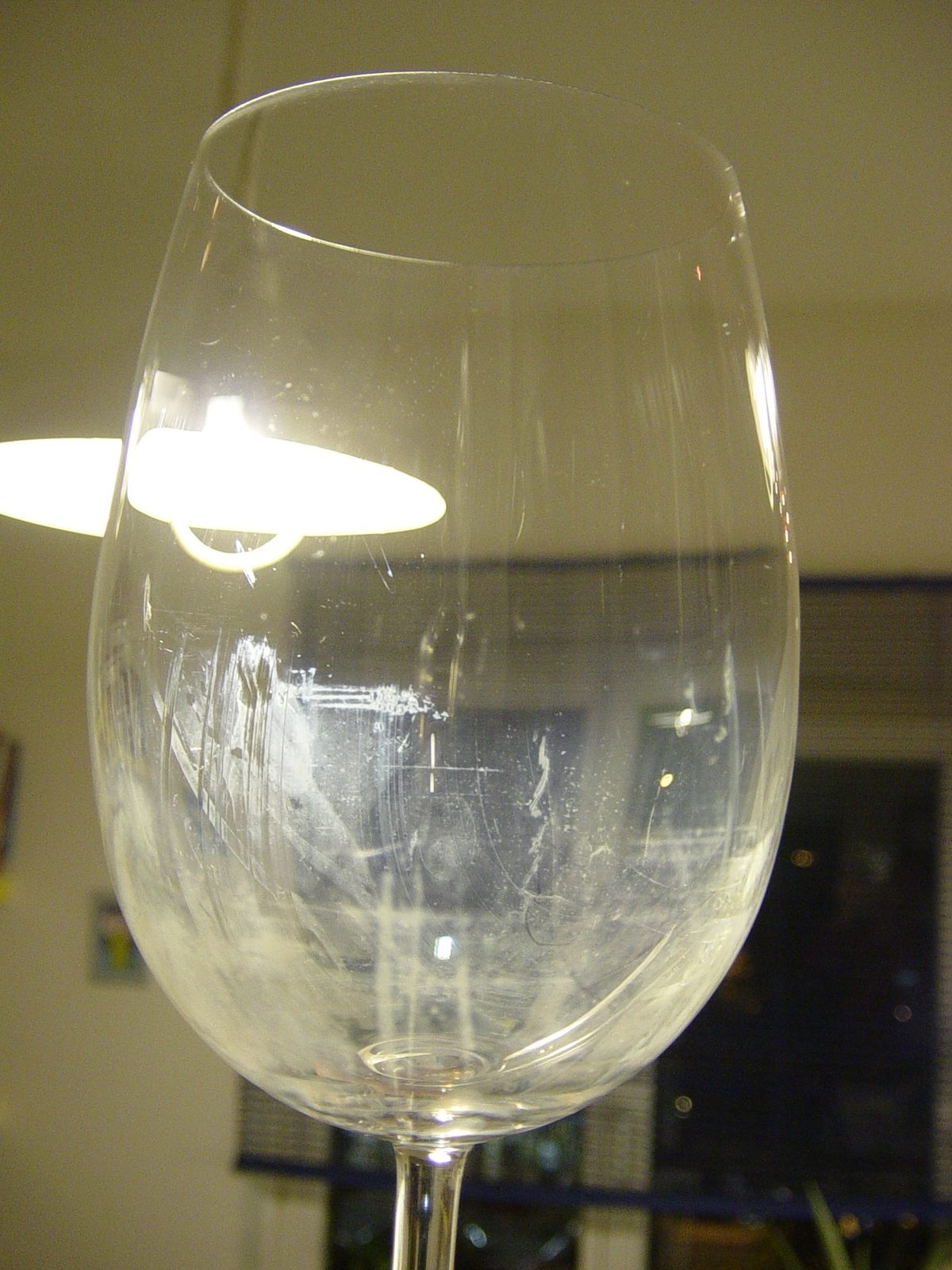
Hard water carries dissolved calcium and magnesium. A drop lands on glass and evaporates. The water leaves, the minerals stay, and what's left is a chalky ring or a scatter of white dots.
At that stage the deposit sits on top of the glass and the glass itself is fine. A mild acid1 dissolves the mineral and the surface under it comes back untouched, which is why a vinegar soak works and scrubbing harder doesn't.
The "yet" matters. Run hard water spots on glasses through a hot dishwasher cycle after cycle and the deposit, with detergent trapped under it, starts working on the surface. That's etching, and etching you can't undo.
How to get rid of water spots on drinking glasses and stemware
White vinegar, half an hour, and a towel in your hand before the glass has a chance to dry itself.
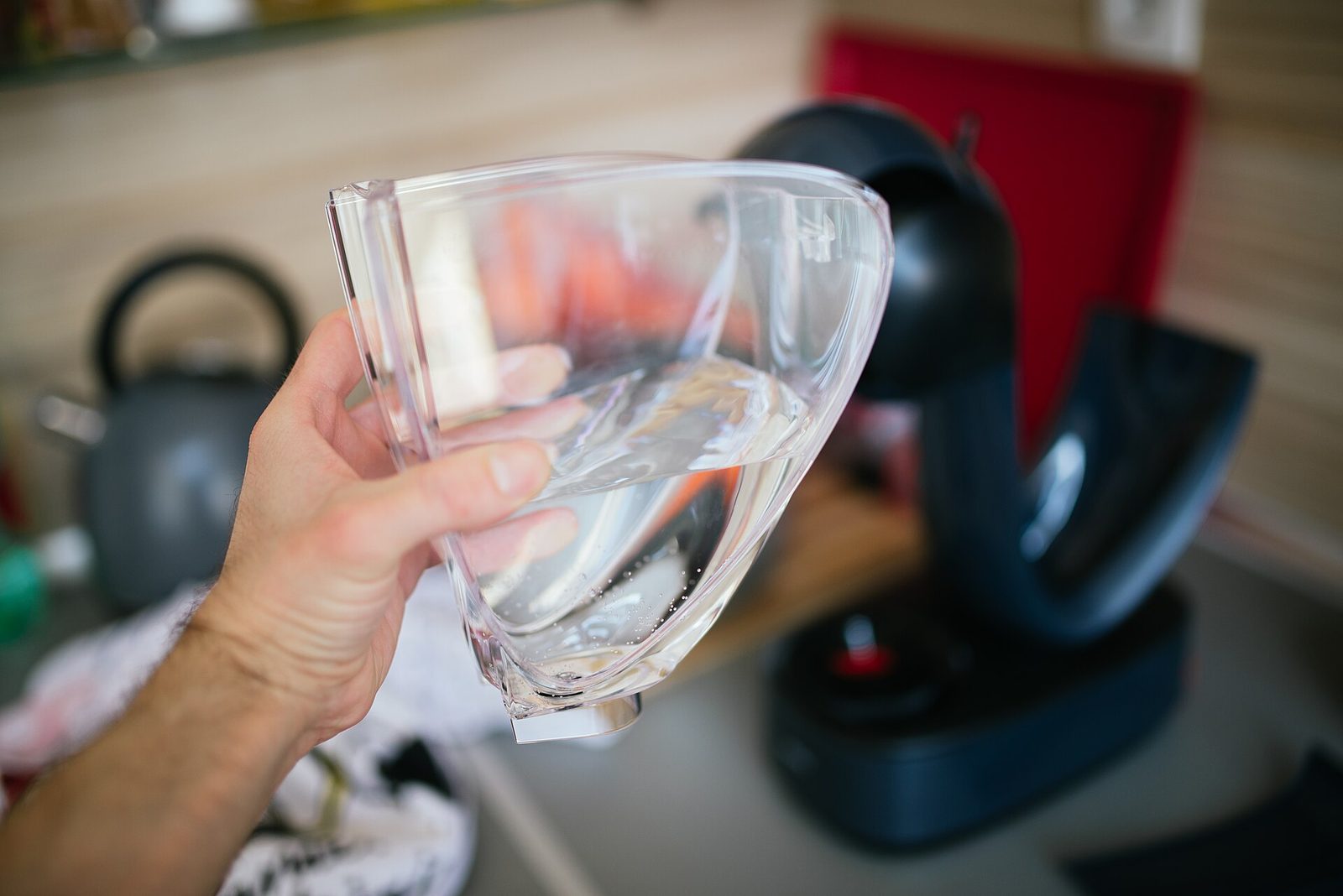
- Mix 50/50 white vinegar and warm water. Plain distilled white vinegar from the cooking aisle. Use a deep container rather than the sink, so the glass stays under instead of floating with half the rim above the line.
- Soak 15 to 30 minutes. Lay stemware on its side and turn it once halfway through, or the spots on the part that stuck out come back looking worse than the rest. Heavy buildup can go longer. There's nothing in vinegar that hurts glass.
- Rinse in warm running water. Get all the vinegar off, inside and out, or the residue dries into its own film and you're back where you started. If your tap runs hard, do the last rinse with distilled water.
- Dry immediately. Not on a rack. The second you let a rinsed glass air-dry you're running the exact process that created the spots in the first place, with the same water.
- Polish with a lint-free microfiber cloth. Cup the bowl through the cloth and support it from inside with your other hand. Don't twist the glass against the stem, which is how stems snap.
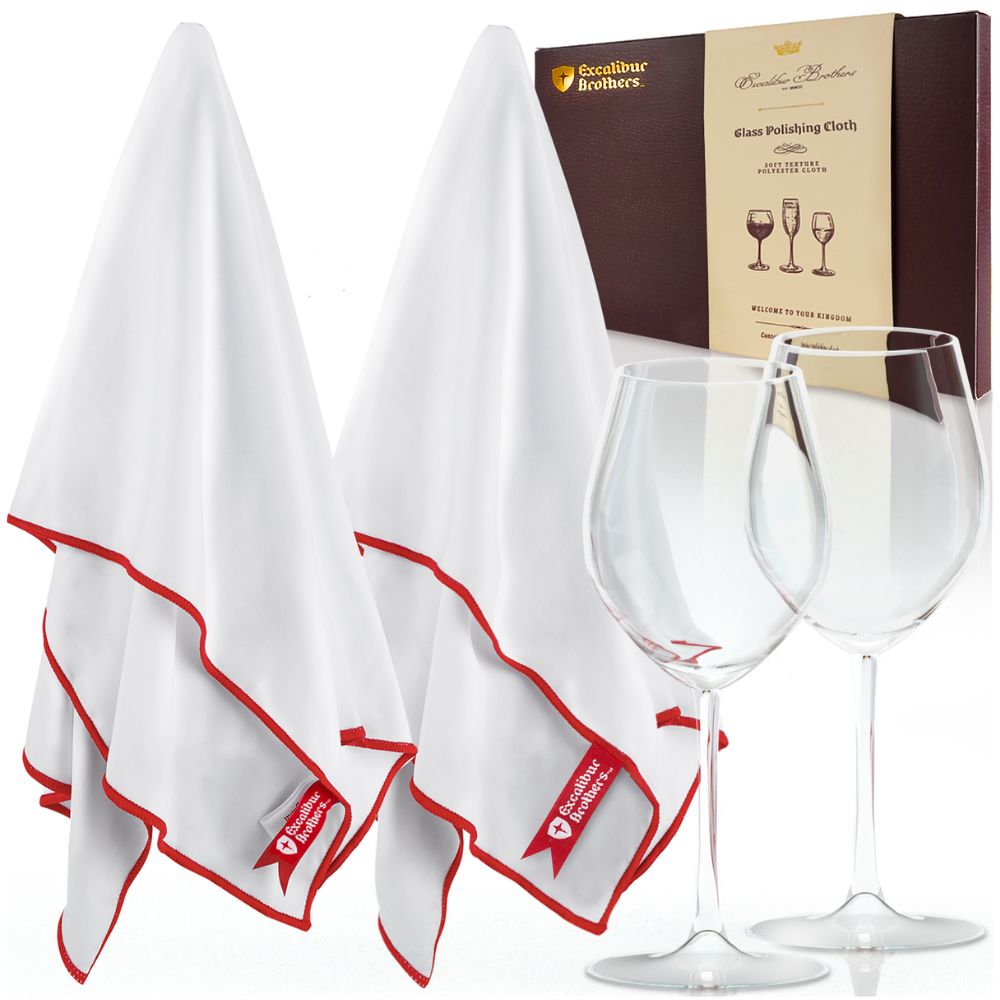
The mistake that undoes all of it is a cotton dish towel. Cotton sheds, and lint on wet glass shows from across the room. Microfiber doesn't shed, and it lifts the last of the water film instead of pushing it around.
That cloth is the one covered on the wine glass polishing cloth page. If the glasses were greasy before the spots appeared, start with how to clean wine glasses.
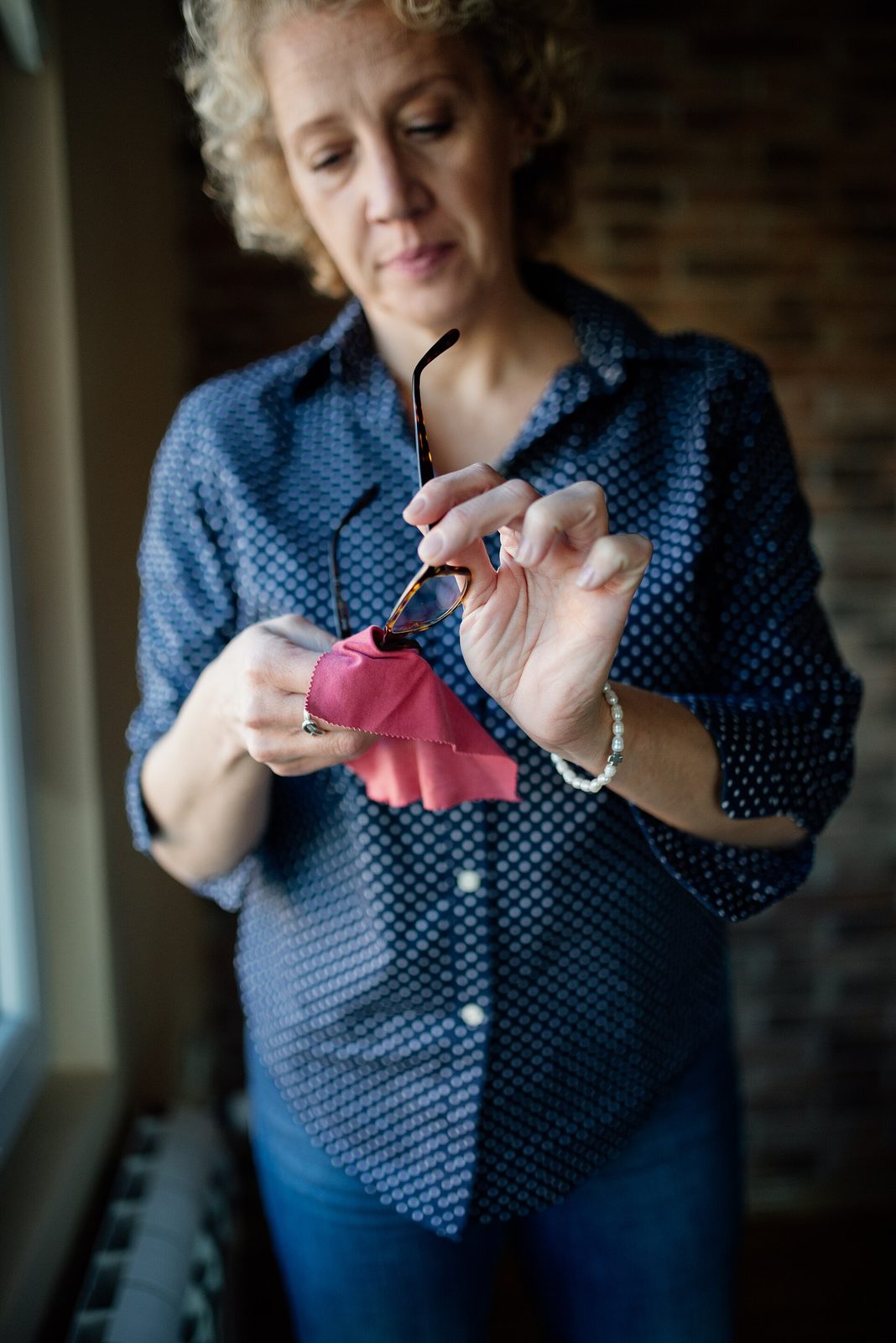
How to get rid of water spots on eyeglass lenses
Forget everything above. Modern lenses carry an anti-reflective stack, and that coating is what you're protecting.
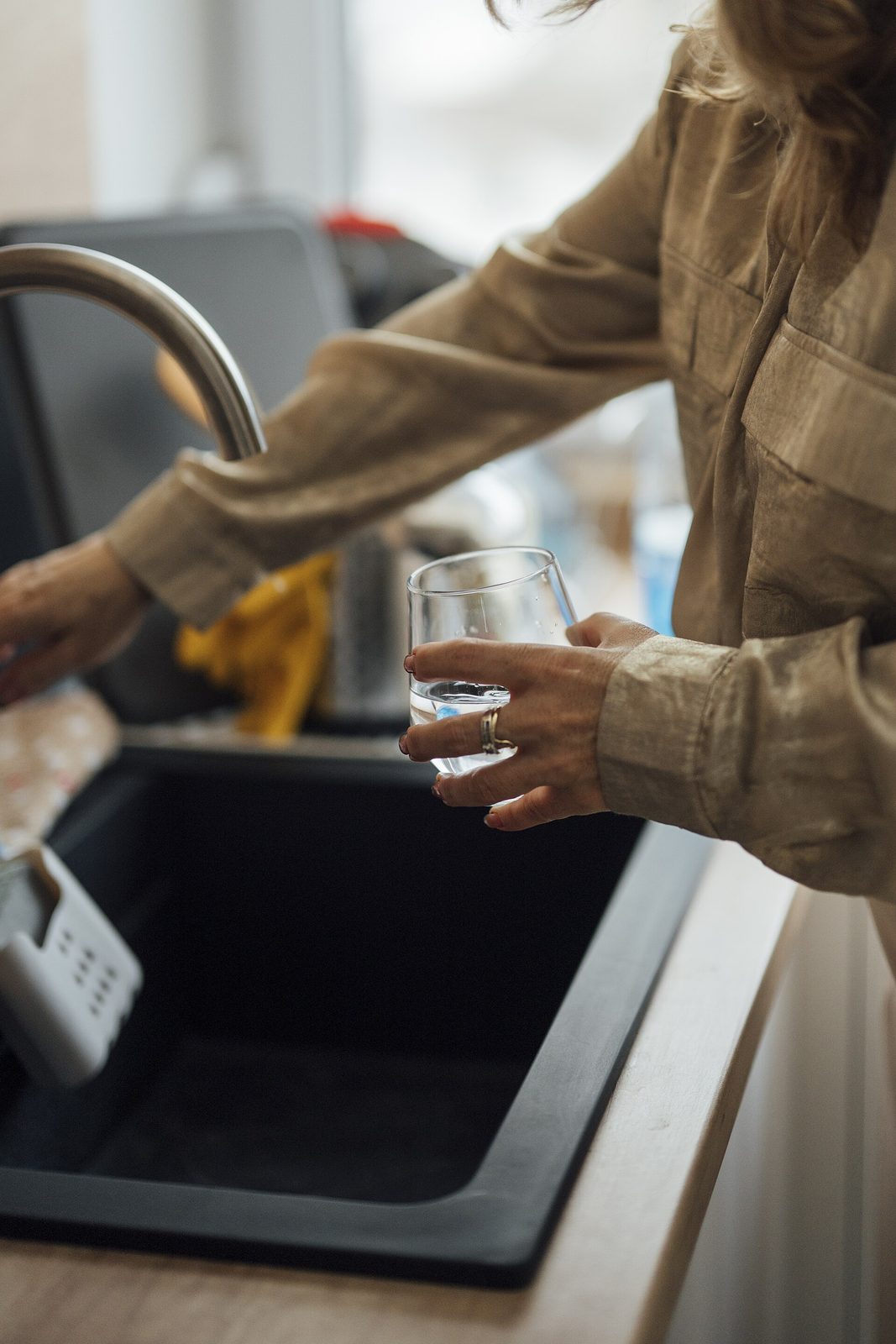
Run the lenses under lukewarm water. Put one drop of plain dish soap on your fingertips, work both sides gently, rinse, then dry with a clean microfiber cloth. That's the whole safe method, and repeating it twice beats doing anything stronger once.
Here we have to be straight with you, because the internet is full of confident claims about lens coatings and almost none of them trace to anybody who treats eyes. We went looking for an authority saying vinegar attacks the anti-reflective layer, or that baking soda hazes it. We could not find one, so we have taken both claims off this page.
What the clinicians actually say is narrower and duller:
- Rinse first, always. Get the dust off2 before anything touches the lens, because a dust particle under a cloth is what puts the scratch there.
- Never wipe a dry lens. This is the one everybody breaks.
- Cold water or a proper lens cleaner3, then a clean microfibre cloth or lens tissue. Not your shirt tail.
- Heat is the named hazard. Hot water, a dashboard, a hot car: that is what cracks a coating.
- Clean less often. Repeated cleaning wears the coating out4 no matter how careful you are, which nobody selling cleaner will tell you.
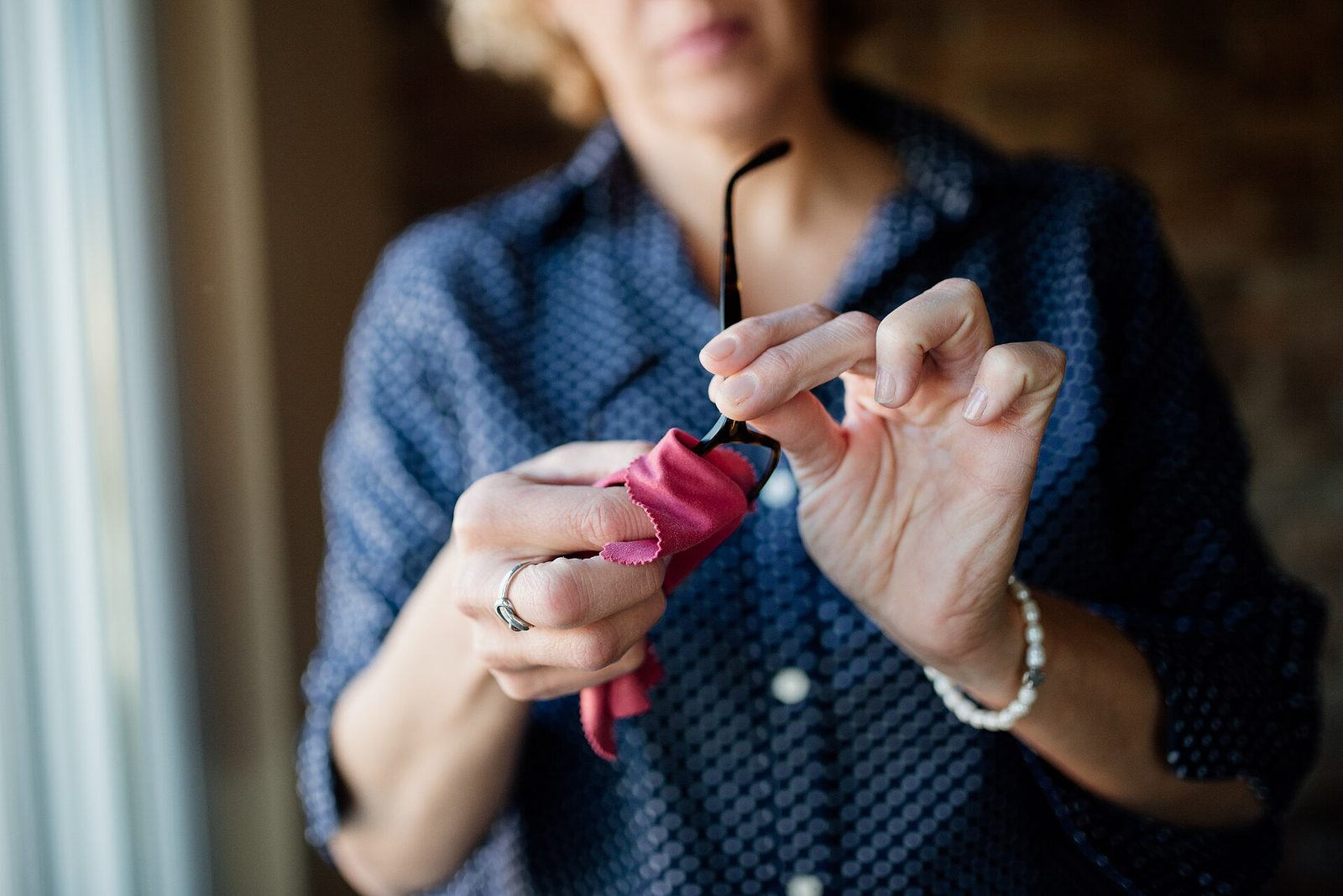
The trick for lenses is distilled water. Tap minerals are what dried on there, so finish with a rinse from a squeeze bottle of distilled water and dry at once. Nothing is left to spot.
If two rounds of soap and water leave the marks exactly where they were, the coating has pitted where the mineral sat. No home method brings that back, and an optician will tell you in about ten seconds.
Windows and shower glass
Same chemistry, more patience: soak paper towels in 50/50 vinegar, lay them flat against the glass for ten minutes so the acid can't run off, then squeegee. Shower doors stay clear if somebody squeegees them while they're wet, which is less work than any of this.
Can water spots be permanent on glass?
Run a fingernail across the spot. If it catches, the mineral is still sitting on the surface and vinegar takes it off. If the glass feels perfectly smooth and still looks cloudy after a soak, the surface itself is etched.
Etched glass can't be fixed. Not with vinegar and not with a longer soak. Dishwasher etching usually looks like an even milky haze across the whole bowl rather than distinct dots. The test for telling film from etching is in how to clean cloudy glasses.
Preventing water spots
Dry every glass the moment it comes out of the water. Use distilled or filtered water for the final rinse if your tap runs hard. Keep rinse aid topped up in the dishwasher, since that's exactly what it's for. Get the water tested if the same haze turns up on your fixtures and shower door.
That habit of drying at once is most of wine glass care in one line. Everything else is cleanup after the fact.
Water spots FAQ
How do you remove hard water spots off of glass? Dissolve them with acid, don't scrub them. Soak drinking glasses 15 to 30 minutes in 50/50 white vinegar and warm water, rinse, then dry and polish immediately with microfiber. For flat glass that can't be soaked, hold vinegar-soaked paper towels against the surface for ten minutes first.
Will a magic eraser remove water spots from glass? It will, and you'll regret using it on anything good. Melamine foam is a very fine abrasive, so it takes the deposit off by sanding it. On shower glass, fine. On stemware or coated lenses you've traded a spot for a dull patch you can't undo.
What are the small white spots on my glasses lenses? Dried mineral deposits, usually from tap water or sweat drying on the lens. Lukewarm water with a drop of dish soap and a microfiber cloth clears them. If they survive two washes, the anti-reflective coating has pitted where the droplets sat, and that damage is permanent.
Sources
Every figure, rule and date above traces to one of these. We link the body that issued it, never someone's summary of it, and we don't link anyone who sells what we sell.
- PubChem, National Library of Medicine (NIH) — CID 10112, Calcium carbonate, Calcium carbonate — Chemical and Physical Properties. Checked 20 Sep 2026.
- Community Eye Health Journal 2010;23(74):57 (Ismael Cordero), via PubMed Central, How to care for and clean optical surfaces. Checked 20 Sep 2026.
- U.S. Department of Veterans Affairs — VA Eye Clinic patient handout, How to care for your eyeglasses. Checked 20 Sep 2026.
- University of Iowa, Department of Ophthalmology and Visual Sciences (EyeRounds Atlas; Tressa Larson, OD, FAAO), Surface Coating Loss on Scleral Lens. Checked 20 Sep 2026.
Read next
Wine Glass Care in Five Habits and One Permanent MistakeWine glass care in five habits: wash by hand with almost no soap, rinse hot, dry warm, polish with microfiber,
How to Clean Wine Glasses With a Single Drop of Dish SoapHow to clean wine glasses: one drop of unscented soap, hold the bowl and never the stem, rinse hot and dry wit

How to Polish Wine Glasses With Steam and Two ClothsHow to polish wine glasses: steam the bowl over hot water, hold the base through one microfiber cloth, finish