
Pocket Notebook Sizes in mm, Because A6 Labels Vary
Four pocket notebook sizes actually fit a pocket: A7 at 2.9 × 4.1 inches, B7 and passport size at 3.5 × 4.9, the Field Notes format at 3.5 × 5.5, and A6 at 4.1 × 5.8 inches. B6 is the outer edge. A5 is a bag notebook, whatever the seller calls it.
| Size | mm | Inches | Which pocket | Typical pages |
|---|---|---|---|---|
| A7 | 74 × 105 | 2.9 × 4.1 | Shirt pocket | 60 to 100 |
| 3 × 5 index card | 76 × 127 | 3.0 × 5.0 | Shirt pocket, front jeans | Loose cards, or 50 to 100 in a memo book |
| B7 (ISO) | 88 × 125 | 3.5 × 4.9 | Front jeans pocket | 64 to 128 |
| Traveler's Company Passport | 89 × 124 | 3.5 × 4.9 | Front jeans, jacket | 64 per refill |
| Field Notes / Moleskine Cahier pocket | 89 × 140 | 3.5 × 5.5 | Back jeans pocket | 48 and 64 |
| Leuchtturm1917 Pocket | 90 × 150 | 3.5 × 5.9 | Back jeans, jacket | 187 numbered |
| A6 | 105 × 148 | 4.1 × 5.8 | Jacket inside pocket | 100 to 192 |
| B6 (ISO) | 125 × 176 | 4.9 × 6.9 | Coat pocket, bag | 160 to 220 |
| A5, for comparison | 148 × 210 | 5.8 × 8.3 | Bag only | 192 to 251 |
Millimetres are the spec and the inch column is rounded to one decimal, so a book sold as 3.5 × 5.5 inches is 88.9 × 139.7 mm on the cutting machine. Page counts are typical for the format rather than a rule. The fixed ones: Field Notes runs 48 pages, a Moleskine Cahier pocket 64, a Traveler's passport refill 64, a Leuchtturm1917 Pocket 187 numbered pages.
Two things in that notebook sizes chart trip people up when they order.
ISO and JIS B sizes are different. ISO B6 is 125 × 176 mm; the JIS B6 that Japanese brands use is 128 × 182 mm. ISO B7 is 88 × 125, JIS B7 is 91 × 128. Half a centimetre doesn't sound like much until it's the half centimetre between your cover and your refill.
"Pocket" and "A6" are both loose on listings. True A6 is 105 × 148 mm. A Leuchtturm1917 Pocket is sold as A6 and measures 90 × 150 mm, narrower and slightly taller. Moleskine's Pocket is the 3.5 × 5.5 format. Buy on the millimetres.
The A sizes at least follow a rule. Each one is the one above it folded in half across the long side, so A5 halves into A6 and A6 halves into A7, and the proportions stay the same the whole way down. That's why an A6 page looks like a shrunken A5 and a 3 × 5 card doesn't: the index card is an American format that owes nothing to the ISO series, which is also why 3 × 5 refills and A6 covers rarely get along.

Which pocket notebook sizes fit which pocket
Pocket is not one measurement. Measure the pocket you'll actually use, then work backwards.
Back jeans pocket. The limit is 3.5 × 5.5 inches, and that's the whole reason the Field Notes size exists. Anything wider than 3.5 inches takes the curve of your hip and stays curved. A stiff hardcover at that size survives sitting down better than a soft one, but it also prints a rectangle through the denim.
Jacket inside pocket. A6 is the ceiling. At 4.1 × 5.8 inches it lies flat against your chest and doesn't tent the lapel. B6 at 4.9 × 6.9 goes in and then announces itself every time you turn.
Shirt pocket. A7 or a 3 × 5. Shirt pockets are shallower than they look, so anything taller than about 5 inches stands proud of the seam and falls out the first time you lean over a table.
Bag. Anything. Once carry stops being the constraint, size is a question of how much you write per entry, and most people who think they want A5 are choosing it for the desk days rather than the twenty days a month the book rides around with them.
The dimension every chart leaves out is thickness, and it decides more than the other two. A 48-page stapled book is a couple of millimetres and vanishes. A 190-page hardcover in the same footprint is closer to a finger's width, and in a back pocket that's the difference between forgetting it's there and sitting on a brick. If you're buying for jeans, buy thin and replace it often. If it lives in a jacket or a bag, take the page count.
The A6 notebook size buys you a line that holds roughly six or seven words of normal handwriting. That's fine for lists, names, numbers and a paragraph of thinking. It's cramped for long entries, which is the honest trade you make for a book that fits a jacket. If long entries are the point, read how men actually stick with journaling before you buy the bigger book.
Which inserts fit the Excalibur Brothers cover
Our refillable leather journal is 4.3 × 5.9 inches, about 109 × 150 mm, and it holds a standard A6 insert at 105 × 148 mm1. That leaves a couple of millimetres of slack around the paper, which is what you want: the leather protects the corners instead of the corners tearing at the leather.
Four specs decide whether a refill works.
Page count. The cover was built around a 100-page block. A 200-page insert is about twice as thick and will sit proud of the edges.
Paper weight. Our rule of thumb, from writing on the stuff rather than from any standard: under 80 gsm shows through with a fountain pen or a wet gel ink, and 90 to 100 gsm takes most pens without ghosting on the reverse. Take it as a guide and not a law. Grammage2 measures one thing, mass per square metre. How much shows through is opacity3, which is a different property measured a different way, and how far the ink spreads is down to the sizing in the sheet4. A well-sized 70 gsm page beats a badly-sized 100 gsm one, every time.
Ruling. Lined for words, dot grid if you sketch or build tables, blank if you draw. Dot grid is the one that does both jobs passably.
How it's held in. Covers hold their insert with an elastic band or a corner slot, sometimes both, and the brand doesn't publish which one this is. Pull yours out and look before you order a stack of refills.
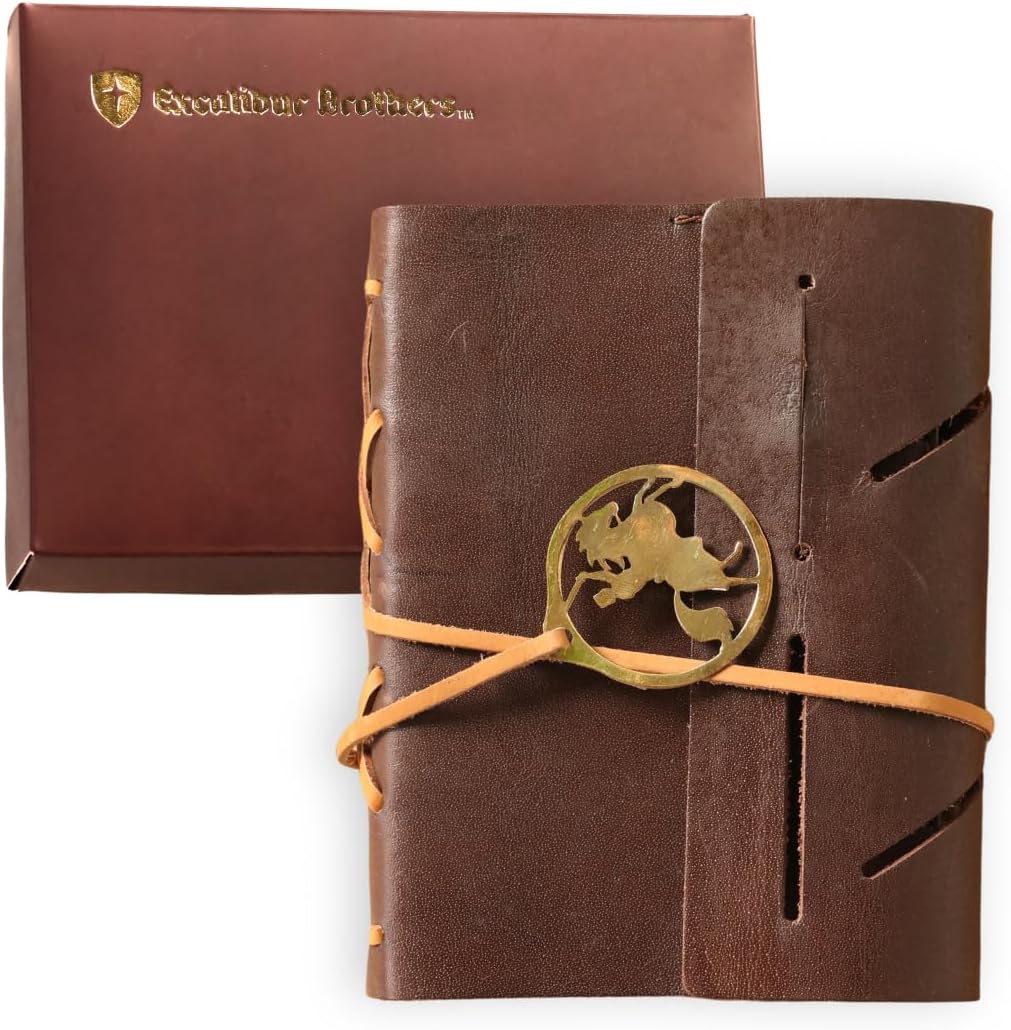
It ships in a keepsake box, which is why it sits on our men's gifts list as well as this one.
A pocket notebook needs a pocket pen
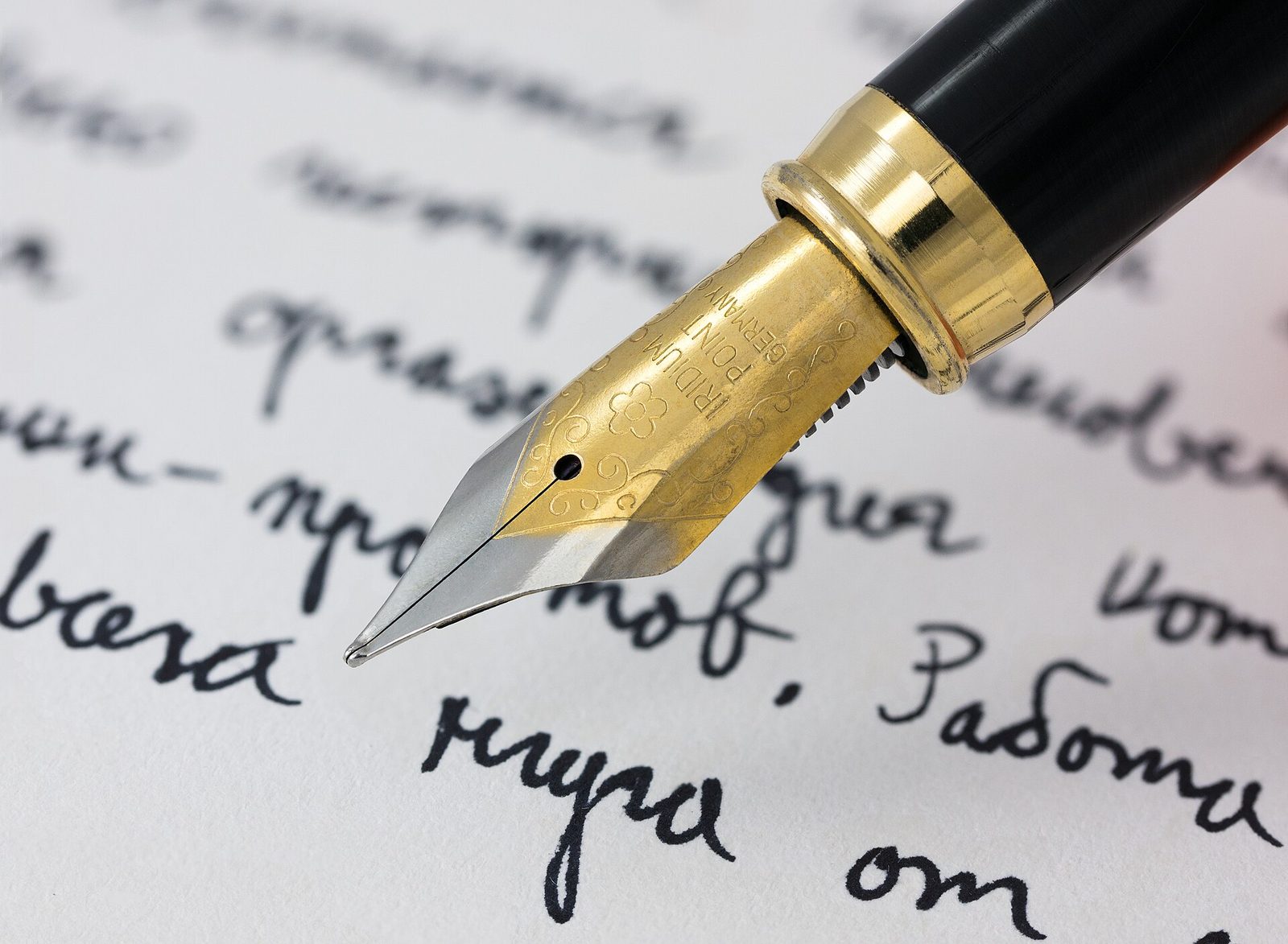
A full-size pen is longer than an A6 book is tall, so it snags on the pocket lip and works its way out; a Fisher Bullet at 3.75 inches closed or a short capped pen at around 4 inches rides flat next to the cover. Check the pen loop too, because a leather loop sized for a slim barrel won't stretch around a fat rollerball.
Pocket notebook sizes: FAQ
What is a pocket notebook called?
Memo book, field notebook, jotter, or pocket notebook, depending on who's selling it. By format it's named for the paper size: A7, A6, B7, or passport size notebook. "Pocket" on a cover is a marketing label, not a measurement, so check the millimetres on the listing.
Is there a pocket notebook that actually fits in my pocket?
Yes, if you buy to the pocket. For a back jeans pocket, stay at or under 3.5 × 5.5 inches. For a jacket, A6 at 4.1 × 5.8 is the largest that lies flat. For a shirt pocket, A7. Measure the pocket first; sizes get generous on listings.
What is the best small pocket notebook?
The one matching the pocket you carry, then the paper you like. Field Notes owns the 3.5 × 5.5 slot; Leuchtturm1917 and Moleskine own the A6 hardcovers. A refillable leather cover is the third route, where the outside outlives the paper. We compare them by published specs and owner reviews in our pocket notebook guide.
Sources
Every figure, rule and date above traces to one of these. We link the body that issued it, never someone's summary of it, and we don't link anyone who sells what we sell.
- Markus Kuhn, University of Cambridge Computer Laboratory, International standard paper sizes. Checked 20 Sep 2026.
- International Organization for Standardization, ISO 536:2019 Paper and board — Determination of grammage. Checked 20 Sep 2026.
- International Organization for Standardization, ISO 2471:2008 Paper and board — Determination of opacity (paper backing) — Diffuse reflectance method. Checked 20 Sep 2026.
- Library of Congress, Preservation Directorate, The Deterioration and Preservation of Paper: Some Essential Facts. Checked 20 Sep 2026.
Read next
Refillable Leather Journal: Keep the Cover, Swap the PagesA refillable A6 leather journal: buffalo leather cover, 100-page ivory insert, pen loop, box. Keep the cover,
How to Condition Leather With Four Checks and One Thin CoatHow to condition leather: the four checks that say it needs it, which balms and oils work, what to keep away f
39 Gifts for Writers, Each With Its Price on the Page39 gifts for writers with every price on the page, from $10 to $400, and the one item on the list we make ours

